As I reached home with my newborn baby, my mother-in-law shouted, “Good. You’re back. Now go wash the dishes.” I could see my sister-in-law getting ready while smoking as she said, “Could you make sure to clean my room, too?” I looked at my husband and he said, “You heard my mother. Now get to work.”
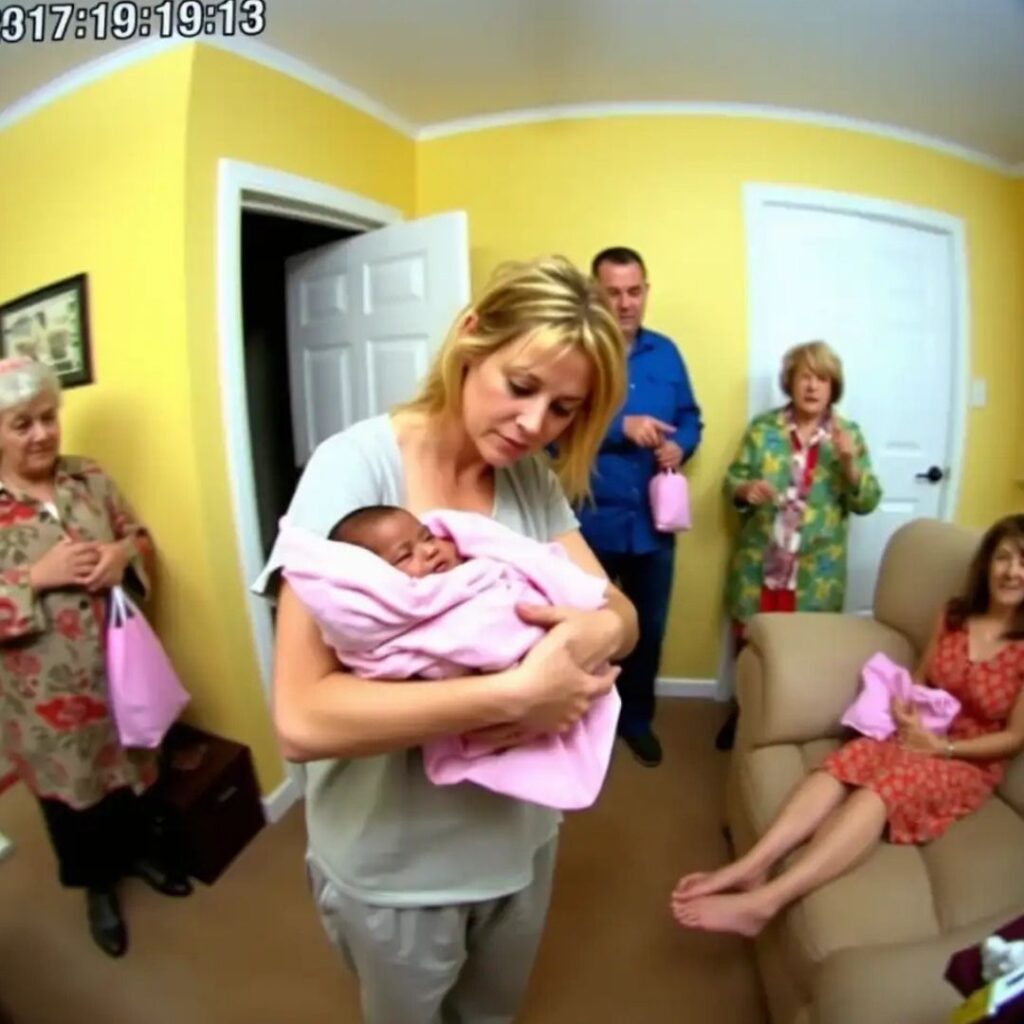
I stayed silent, went into my room, and made one phone call that left all of them pale.
The automatic doors of the hospital slid shut behind me as I stepped into the warm afternoon sun, cradling my 3-day old daughter, Lily, in my arms.
After 48 hours of labor, followed by an emergency C-section, every step sent sharp pains through my abdomen.
But I was finally going home.
My husband, Aaron, walked beside me, carrying the small pink duffel bag that contained the few belongings we brought to the hospital.
“Ready to go home, sweetheart?” he asked, though his attention seemed focused on his phone rather than on Lily or me.
I nodded, too exhausted to speak.
The past three days had been a blur of contractions, medical procedures, sleepless nights, and the overwhelming joy of holding my daughter for the first time.
All I wanted was to collapse into my own bed and begin the journey of being a new mother in the comfort of our home.
The drive back to Aaron’s family house, where we’d been living for the past 2 years to save money, took 20 minutes through familiar suburban streets.
I’d grown up in this same neighborhood, though my family had moved from Arizona to this area when I was 25, and that’s where I met Aaron at a local coffee shop.
Aaron’s family had graciously offered us the converted basement apartment when we got married.
And while it wasn’t ideal, it had allowed us to save for a down payment on our own place.
As we pulled into the driveway of the large colonial house, I could see the curtains twitch in the front window.
Aaron’s mother, Patricia, had been waiting for our return.
She’d visited us once in the hospital, staying for exactly 15 minutes before declaring the hospitals gave her the creeps and leaving with promises to help once we got home.
Aaron parked the car and came around to help me out.
Every movement sent sharp pains through my abdomen, and I had to grip his arm tightly and move very slowly.
The incision sight throbbed with each step, and I felt dizzy from the exertion of just getting from the car to the front door.
Before Aaron could even reach for his keys, the door swung open.
Patricia stood there in her floral house coat, her graying hair pinned back severely and her mouth already moving.
“Well, it’s about time you got back,” she said, barely glancing at Lily before focusing on me. “I’ve been waiting all morning for you to get here. The kitchen is a disaster. Aaron’s been eating takeout for 3 days and hasn’t cleaned up after himself once.”
She paused, looking me up and down.
“Though. I suppose you need to rest for a day or two first. Doctor’s orders and all that.”
I blinked, still processing her words.
The fact that she mentioned rest at all seemed like a small mercy, though her tone suggested it was more of an inconvenience than concern.
“Hello, Patricia. We just got home from the hospital.”
“Yes, I can see that,” she replied impatiently. “Come on then. Don’t just stand there on the porch. Aaron can handle getting your things. You should probably lie down for a bit. You look terrible.”
Aaron said nothing as we followed his mother into the house.
The familiar smell of her lavender air freshener mixed with something less pleasant, the sour smell of old food and cigarette smoke.
As we passed through the living room, I could see his sister Ellen sprawled on the couch, still in her pajamas despite it being nearly 2 in the afternoon.
Ellen was 32 years older than me and had been living in her childhood bedroom Renfree for the past 5 years.
She worked part-time at a local boutique, but spent most of her energy on her social media presence and what she called her influencer career, though she had fewer than 3,000 followers.
“Oh, good,” Natalie’s back, Ellen said without looking up from her phone.
She had a lit cigarette dangling from her lips, dropping Ash carelessly onto the coffee table.
“I hate to ask when you’re obviously still recovering, but I’m in a real bind. I’ve got this important date tonight with a guy I met on Instagram. Like, this could be the one, you know? Would it be possible for you to maybe tidy up my room in a day or two when you’re feeling better? I know it’s a lot to ask, but I just don’t have time, and you’re so much better at organizing than I am.”
I stood there holding my newborn daughter, feeling the stitches pull at my abdomen with each breath, and stared at both women.
Even Ellen’s attempt at politeness felt calculated and manipulative.
Instead, Aaron sat down the hospital bag and looked uncomfortable.
“Look, Mom. Maybe Natalie should rest for a few days first. She did just have surgery.”
“Oh, of course,” Patricia said quickly. “I’m not heartless, but once you’re back on your feet, we really do need to get caught up around here. This house has been falling apart without you.”
It was the phrase without you that hit me like a physical blow.
Not without help or without extra hands.
Without me specifically, as if I were the designated household servant rather than a new mother who deserved care and support.
I looked at my husband, the man who had promised to love and cherish me, who had held my hand during labor, who had cried when Lily was born.
Even his half-hearted attempt to defend me felt hollow.
In that moment, three years of marriage crystallized into a pattern I’d been too in love, too hopeful, too naive to see clearly.
This wasn’t the first time Aaron had failed to fully support me against his family’s demands.
It wasn’t even the first time I’d been expected to clean up after Ellen, who treated the house like a hotel and me like unpaid staff.
But somehow, standing there with my 3-day old daughter while still recovering from major surgery, the reality of my situation became undeniably clear.
“I need to feed Lily and rest,” I said quietly.
“Of course, dear,” Patricia said with false sweetness. “Take all the time you need, but once you’re feeling better in a few days, we really should talk about getting back to our normal routine.”
“Actually, I need to pump and take my medication first,” the doctor said.
“Oh, please,” Ellen interrupted, finally looking up from her phone. “Women have been having babies for thousands of years without all this fuss. Our mother managed just fine with us and she didn’t spend all day resting and making excuses.”
I felt tears burning behind my eyes, but I refused to let them fall.
Not here.
Not in front of them.
The dismissal of my medical needs, the minimizing of my recovery, the expectation that I should be grateful for even temporary reprieve, it all crystallized into a moment of perfect clarity.
“I’m going to take Lily to our room for a few minutes,” I said.
“Fine,” Patricia said. “But don’t think you’re going to hide down there all day. Those dishes need to be done before dinner, and I’m making pot roast tonight. You’ll need to peel the potatoes, too.”
I walked carefully down the narrow stairs to our basement apartment.
Each step sending fresh waves of pain through my midsection.
The apartment consisted of a bedroom, a tiny kitchenet, and a bathroom that Aaron had installed himself.
It wasn’t much, but it had been our sanctuary for 2 years.
Lily began to fuss as I sat down gingerly on the bed, and I lifted my shirt to nurse her.
As she latched on, I felt a familiar tug of oxytocin and love, but it was mixed with something else now, cold, hard anger that I’d never felt before.
My body achd.
I was exhausted, and instead of being cared for, I was being made to feel guilty for needing recovery time.
I looked around our small room, taking inventory.
My laptop sat on the dresser, closed, but ready.
My phone was in my purse, and tucked away in the bottom drawer of my nightstand was a manila folder I hoped I’d never need to open.
Two years ago, when Aaron and I first got married, my grandmother had pulled me aside at the reception.
Grandma Rose was 93 years old and sharp as attack, a woman who had survived the depression, World War II, and raising five children largely on her own while my grandfather worked double shifts at the steel mill.
“Natalie, honey,” she’d said, pressing something into my hand. “I hope you never need this, but if you do, don’t hesitate to use it.”
It was a business card for her attorney along with a handwritten note that simply said, “Trust Fund access, Natalie only. No questions asked.”
I’d been confused at the time.
What trust fund?
My family had never been wealthy.
We’d been comfortable, but certainly not rich enough to have trust funds.
But Grandma Rose had winked and told me to put it somewhere safe just in case.
After she passed away 6 months later, I called the attorney out of curiosity.
What I learned had shocked me to my core.
My great-grandfather, Rose’s father-in-law, had been a shrewd businessman in the 1940s and50s.
He’d invested heavily in what was then a small technology company that later became a Fortune 500 corporation.
The family had kept quiet about the money for generations, living modestly and investing wisely.
By the time it came to my generation, the trust was worth just over $4 million.
The catch was that it could only be accessed by direct descendants and only in cases of genuine need, medical emergencies, domestic violence, or other crisis situations.
My grandmother had been the trustee, and before she died, she’d updated the documents to make me the sole beneficiary of my portion.
I’d never told Aaron about the money.
Not because I didn’t trust him, but because we’d never needed it.
We’d been happy in our small apartment, building our life together, saving for our future.
The trust fund felt like a safety net I’d hopefully never need.
But as I sat there nursing my daughter while listening to Patricia bang pots and pans upstairs in obvious irritation at my delay, I realized that genuine need might include escaping a marriage to a man who saw me as his family’s unpaid servant.
Lily finished nursing and fell asleep in my arms.
I laid her gently in the bassinet we’d set up next to our bed, then walked to the nightstand and pulled out the manila folder.
Inside was the attorney’s business card, the trust documents, and a letter from my grandmother that I’d never opened.
With shaking hands, I unfolded the letter.
My dearest Natalie, if you’re reading this, it means you’re in a situation where you need help, and I’m no longer there to provide it myself. I want you to know that your great-grandfather made this money not just for security, but for freedom. He grew up poor and powerless, and he never wanted his descendants to feel trapped by circumstances or other people’s expectations. I’ve watched you your whole life, sweetheart. You’re kind and generous to a fault, always putting others before yourself. While those are beautiful qualities, they can also make you vulnerable to people who would take advantage of your good nature. This money isn’t just about financial security. It’s about choices. It’s about being able to walk away from any situation that doesn’t serve you, whether that’s a job, a relationship, or anything else that makes you feel small or unvalued. Use it wisely, but don’t hesitate to use it at all. Your happiness and well-being are worth more than any amount of money.
All my love,
Grandma Rose.
P.S. I’ve also included information about a private investigator I’ve used in the past. Sometimes knowing the truth about people’s character can be just as valuable as financial freedom.
I stared at the letter, feeling as if my grandmother was speaking to me from beyond the grave.
There was indeed a second business card paper clip to the letter.
A private investigator named David Chen.
Upstairs, I could hear Patricia’s voice getting louder and more agitated.
“Where is that girl? Those dishes aren’t going to wash themselves.”
I picked up my phone and dialed the attorney’s number.
It rang twice before a professional voice answered.
“Morrison, Kelly, and Associates. This is Janet speaking.”
“Hi, this is Natalie Carson. I need to speak with Mr. Morrison about accessing a trust fund set up by Rose Patterson.”
“Of course, Mrs. Carson. Mr. Morrison has been expecting your call for quite some time. Can you hold for just a moment?”
The wait felt eternal, though it was probably less than a minute.
Finally, a warm male voice came on the line.
“Natalie, this is Robert Morrison. I’m so sorry for your loss. Your grandmother was an extraordinary woman. How can I help you today?”
I took a deep breath.
“I think I need to access the trust fund.”
“I see. Can you tell me a bit about your current situation?”
As briefly as possible, I explained my living situation, Aaron’s family dynamics, and what had just happened when I arrived home from the hospital.
Mr. Morrison listened without interruption.
“Natalie, I want you to know that your grandmother specifically mentioned scenarios like this when we updated the trust documents. She was very concerned about ensuring you’d never be trapped in a situation where you felt powerless. Based on what you’ve told me, I believe accessing the funds is absolutely appropriate.”
“How quickly can it be done?”
“I can have a cashier’s check ready for you within 2 hours. The initial dispersement can be up to $500,000 with additional funds available as needed. Will that be sufficient for your immediate needs?”
$500,000.
More money than I’d ever imagined having access to.
Enough to disappear completely if I needed to.
“Yes,” I said. “That would be more than sufficient.”
“Excellent. I’ll also need to give you some contact information. Your grandmother specifically requested that I connect you with a family law attorney who specializes in high asset divorce cases should you ever need one. And there’s a private investigator who’s done work for our firm, completely trustworthy and discreet.”
We spend another 10 minutes going over the logistics.
I could pick up the check that afternoon and Mr. Morrison would handle all the paperwork.
He also gave me the contact information for the divorce attorney and confirmed David Chen’s number.
After I hung up, I sat in the quiet room for a few minutes listening to Lily soft breathing and the continued complaining from upstairs.
Then I made my second phone call.
David Chen answered on the first ring.
“Chen investigations.”
“Mr. Chen, this is Natalie Carson. I got your number from Robert Morrison.”
“Ah, yes. Rose Patterson’s granddaughter. How can I help you?”
“I need a complete background check on my husband and his family. I need to know if there are things they’ve been hiding from me. What kind of timeline are we looking at? How quickly can you work for a priority case?”
“I can have preliminary results within 24 hours and a complete report within a week. What’s your budget?”
“Money isn’t a concern.”
“In that case, I can have two investigators on it starting immediately. I’ll need some basic information from you and then I’ll get to work.”
I gave him all the details I could think of.
Full names, dates of birth, previous addresses, employment history, social media profiles.
David took notes efficiently and promised to call me with an update by the following evening.
After the call ended, I realized the house had gone quiet upstairs.
Too quiet.
I could hear whispered conversations, but I couldn’t make out the words.
I had one more call to make.
The divorce attorney, Rebecca Martinez, was in court, but her assistant scheduled me for an emergency consultation the following morning.
I was told to bring any financial documents I had access to, as well as documentation of the trust fund.
By the time I finished making arrangements, it was nearly 4:00.
Lily was starting to stir, ready for another feeding.
I could hear footsteps on the stairs, heavy ones that belong to Aaron.
He appeared in the doorway, looking sheepish, but determined.
“Natalie, Mom’s getting really upset about the dishes. I know you’re tired, but—”
“Aaron,” I interrupted. “Sit down. We need to talk.”
Something in my tone must have surprised him because he actually sat down on the edge of the bed without arguing.
“I’ve been thinking about what happened when we got home today,” I said carefully. “About what your mother and Ellen said to me, and about your response.”
“Look, I know they can be a little demanding, but—”
“A little demanding.”
I kept my voice level.
“Aaron, I gave birth three days ago. I had major surgery. I’m supposed to be resting and bonding with our daughter, not scrubbing your sister’s dirty dishes.”
“But we live here for free,” he said, sounding like he was reciting a script. “Mom has been very generous with us.”
“Has she? Or have we been very generous with our labor? When was the last time you calculated how much money we’ve saved your family by doing all the cleaning, cooking, and maintenance around here?”
Aaron looked uncomfortable.
“That’s different.”
“Is it? When was the last time Ellen cleaned anything? When was the last time your mother did her own laundry? I’ve been doing everything for this household for two years, Aaron. Everything except paying rent.”
“Where is this coming from, Natalie? You’ve never complained before.”
That was true.
And it was my fault.
I’d been so eager to be accepted by his family, so grateful for their housing, so in love with Aaron, that I’d gradually taken on more and more responsibilities without protest.
I told myself it was temporary, that once we saved enough money for our own place, things would be different.
But today had shown me the truth.
Things would never be different because Aaron didn’t see anything wrong with the current arrangement.
“I’m complaining now,” I said. “I’m your wife, Aaron, the mother of your child. But you stood there and told me to get to work instead of defending me or supporting me.”
“I just think you’re being a little sensitive.”
“Get out.”
“What?”
“Get out of this room now.”
Aaron stood up, looking confused and slightly angry.
“This is my room, too.”
“Then I’ll leave.”
I stood up carefully, lifted Lily from her bassinet, and walked past him toward the stairs.
Every step hurt, but I was fueled by something stronger than pain now.
I could hear Aaron following behind me.
“Natalie, don’t be ridiculous. Where are you going to go?”
I didn’t answer.
Instead, I walked straight through the living room where Patricia and Ellen were now both sitting on the couch, clearly having been discussing me.
“There you are,” Patricia said. “Those dishes?”
“I’m leaving,” I announced.
The room went dead silent.
“What do you mean leaving?” Ellen asked, lowering her phone for the first time all day.
“I mean, I’m taking my daughter and leaving this house.”
“Don’t be dramatic,” Patricia said. “You can’t just leave. You don’t have anywhere to go.”
I smiled at her, the first genuine smile I’d felt all day.
“Actually, I do.”
Aaron caught up to me in the entryway.
“Natalie, stop. You’re being irrational. You just had a baby. You can’t make major decisions right now.”
“Watch me.”
I opened the front door and walked outside.
The fresh air felt like freedom.
“Natalie,” Aaron called after me. “You don’t even have a car seat.”
He was right.
The car seat was still in his car.
But I had my phone.
And I had money.
Real money.
For the first time in my adult life.
I called an Uber requesting a car seat for an infant.
While I waited, I called the nicest hotel in town, the Grand Downtown, a place I’d never been able to afford before.
“I’d like to book a suite for an indefinite stay,” I told the reservations clerk.
“Certainly. What dates are you looking at?”
“Starting tonight, and I’m not sure when I’ll be checking out. Could be a few days, could be a few weeks.”
“Of course. We have a lovely corner suite available with a separate sitting room. Would you like me to arrange for a crib to be delivered to the room?”
“Yes, please. And could you also arrange for some basic baby supplies to be delivered? Diapers, formula, bottles, clothes, and newborn size.”
“I’ll have our concierge take care of that immediately.”
The Uber arrived just as I hung up the phone.
The driver, a middle-aged woman named Maria, helped me get Lily secured in the car seat and asked no questions about why a woman and newborn baby were being picked up with no luggage.
As we drove away, I looked back at the house and saw three faces pressed against the front window, watching in shock as their living maid drove away.
The grand downtown was everything I’d imagined it would be.
Elegant marble lobby, crystal chandeliers, and staff who treated every guest like royalty.
The suite was beautiful, with a separate bedroom, a living area with a city view, and a marble bathroom with a soaking tub that I was definitely going to use once I could take baths again.
The baby supplies arrived within an hour, along with a beautiful wooden crib that the hotel staff assembled in the bedroom.
I ordered room service, the first meal I’d eaten in days that I didn’t have to cook or clean up after, and settled in to feed Lily and plan my next moves.
My phone had been buzzing constantly with calls and texts from Aaron.
I’d been ignoring them, but finally decided to read his messages.
Where are you?
This is ridiculous, Natalie.
Come home.
My mom is upset.
You need to apologize.
You can’t just take Lily away from her family.
I know you’re at a hotel.
This is a waste of money we don’t have.
The last message made me laugh out loud.
Money we don’t have.
If only he knew.
I texted back, “I’m safe. Lily is safe. I need space to think. Don’t contact me again until you’re ready to have a real conversation about our marriage.”
His response was immediate.
“You’re being crazy. People don’t just leave their families because they don’t want to do dishes.”
I turned off my phone.
The next morning, I woke up in the most comfortable bed I’d ever slept in, with my daughter sleeping peacefully beside me in her hotel crib.
Room service brought me coffee and fresh fruit, and I spent the morning just enjoying the quiet and the luxury of having nothing to do but take care of Lily and myself.
At 10:00, I had my appointment with Rebecca Martinez.
She was a sharp, professional woman in her 50s who specialized in high asset divorces and had a reputation for being tough but fair.
“Tell me about your situation,” she said after we’d settled in her office conference room.
I walked her through everything, the living situation, the family dynamics, the money I just learned about, and what had happened when I came home from the hospital.
Rebecca took notes and ask pointed questions.
“Natalie, I want to be very clear about something. What you’ve described isn’t just an unsupportive spouse. It’s a pattern of financial and emotional abuse. You’ve been providing unpaid domestic labor for an entire household while receiving no compensation and no respect.”
“But we were living there for free,” I said, echoing Aaron’s constant refrain.
“Were you? You were providing housekeeping, cooking, laundry, and maintenance services for four adults. If they’d hired someone to do that work, what would it have cost them?”
I’d never thought about it that way.
But she was right.
A living housekeeper would have cost thousands of dollars per month.
“Moreover,” Rebecca continued, “your husband has shown that he prioritizes his family of origin over his wife and child. That’s a fundamental problem that goes beyond housework.”
We spent two hours going over my options.
Rebecca recommended that I file for divorce immediately, seeking full custody of Lily based on Aaron’s failure to provide a safe and supportive environment.
With the trust fund, I could easily support myself and Lily without needing alimony, which would actually strengthen my position.
“I want you to understand,” Rebecca said as we wrapped up. “You have all the power here. You have financial independence. You have a clean history. And you have documentation of their behavior. Don’t let anyone convince you that you’re being unreasonable.”
That afternoon, David Chen called with his preliminary report.
“Natalie, I found some interesting things. Are you somewhere private where we can talk?”
I was back in my hotel suite with Lily napping in her crib.
“Yes. Go ahead.”
“Let’s start with your husband. Aaron has been unemployed for the past 6 months, but he’s been telling people he’s still working at the construction company. He was actually fired for repeated no-shows and drinking on the job.”
I felt the bottom drop out of my stomach.
“What?”
“It gets worse. He’s been collecting unemployment benefits, but instead of contributing to household expenses or your savings account, he’s been gambling, online poker, sports betting, casino visits. I have records of over $30,000 in losses in the past six months.”
I was speechless.
“Your sister-in-law, Ellen, has been claiming unemployment benefits while working under the table at three different businesses. That’s fraud. And your mother-in-law, Patricia, has been claiming you and Aaron as dependence on her tax returns, taking advantage of deductions for supporting adult children, even though you’ve been paying for groceries and utilities.”
“How is that possible?”
“Because you never see the bills. She’s been pocketing the money you give her for your share of expenses and then claiming financial hardship on her taxes. It’s tax fraud.”
I sat down heavily on the hotel room couch.
My entire marriage had been built on lies.
“There’s more,” David continued. “I found evidence that Ellen has been stealing from her part-time job, skimming cash from the register, and taking merchandise. And Patricia has been running a small-scale prescription drug resale operation, selling pills she gets from multiple doctors to people in the neighborhood.”
“Oh my god.”
“Natalie. This family is involved in multiple criminal activities. You getting out when you did might have saved you from becoming an accessory to federal crimes.”
After David’s call, I sat in the quiet hotel room and cried.
Not just from sadness.
But from relief.
Relief that I trusted my instincts.
Relief that I’d found out the truth before it was too late.
And relief that I had the resources to protect myself and Lily.
Before Aaron called that evening, I decided to do something I’d never done before.
I called my parents in Arizona.
My mother answered on the second ring.
“Natalie, how are you feeling? Honey, how’s little Lily?”
“Mom, I need to tell you something.”
And for the first time in years, I told my parents the complete truth about my living situation.
I described the constant demands, the way Aaron’s family treated me, and what had happened when I came home from the hospital.
There was a long silence before my father’s voice came on the line.
My mother had put me on speaker.
“Natalie Elizabeth Carson,” he said, using my full name the way he had when I was a child. “Why didn’t you tell us about this sooner?”
“I thought I could handle it. I thought it was temporary.”
“Sweetheart,” my mother said gently. “Marriage is supposed to be a partnership. What you’re describing sounds more like indentured servitude.”
“We raised you to be independent and strong,” my father added. “Not to be anyone’s unpaid servant, family or not.”
Hearing my parents validation of what I’ve been feeling gave me strength I didn’t know I needed.
They offered to fly out immediately, but I assured them I had everything under control.
I told them about the trust fund, about the lawyers, about my plans.
“Your grandmother would be so proud of you,” my mother said through tears. “She always said you had more backbone than you knew.”
After we hung up, I felt lighter somehow.
For 3 years, I’ve been isolated from my support system, gradually convinced that my feelings were unreasonable and my expectations too high.
Hearing my parents confirm that I deserved better was like having a fog lift from my brain.
I spent the rest of the afternoon researching apartments online and making a list of everything I’d need to set up a proper home for Lily and myself.
The hotel suite was lovely, but it wasn’t a permanent solution.
I wanted Lily to have a real nursery, a place where she could grow up, surrounded by love and stability.
I also called my old boss from the marketing firm where I’d worked before getting married.
Janet had always told me I had a natural talent for client relations and strategic planning.
“Natalie, I was just thinking about you. How’s married life treating you?”
“Actually, that’s why I’m calling. I’m getting divorced and I’m thinking about starting my own consulting business. Would you be willing to be a reference for me?”
“Of course. But more than that, I have three clients right now who are looking for exactly the kind of strategic marketing work you used to do. If you’re serious about going independent, I could probably send some business your way.”
“Janet, that would be incredible.”
“Send me your business plan when you have it ready. And Natalie, I always thought you were undervaluing yourself at that company. This might be the best thing that ever happened to your career.”
By the time the sun was setting over the city, I had three potential clients lined up, a short list of apartments to view, and a clear vision of what my new life was going to look like.
I was feeding Lily when my phone rang with Aaron’s call.
“Natalie, thank God. Where are you? We need to talk.”
“Yes, we do need to talk.”
“Good. Come home and we’ll work this out.”
“I’m not coming home, Aaron. I want a divorce.”
There was a long pause.
“You can’t be serious.”
“I’m completely serious. I’ve already hired a lawyer.”
“A lawyer? Natalie, we can’t afford a lawyer.”
“I can.”
“What do you mean? We don’t have any money saved.”
“You don’t have any money saved. I, on the other hand, have plenty of money.”
Another pause.
“What are you talking about?”
“I’m talking about the inheritance. I never told you about the trust fund that’s now entirely at my disposal.”
I could hear him breathing heavily.
“How much money?”
“Enough to never have to clean your mother’s house again. Enough to raise Lily without needing anything from you or your family. Enough to hire the best divorce attorney in the state.”
“Natalie, you’re making a huge mistake. We can work this out. I know Mom and Ellen can be difficult, but—”
“Aaron, I know about the gambling.”
Silence.
“I know you lost your job 6 months ago. I know about the $30,000 you’ve lost betting online. I know about Ellen’s unemployment fraud and your mother’s tax fraud and prescription drug dealing.”
“How could you possibly—”
“I hired a private investigator. A very good one.”
“You what?”
“I hired a private investigator to find out what else you’ve been hiding from me. Turns out it was a lot.”
I could hear voices in the background, Patricia and Ellen asking what was happening.
“Natalie, you can’t just—”
“I can. And I did. You’ll be served with divorce papers within the week. I’m seeking full custody of Lily, and given what I’ve learned about your family’s criminal activities, I don’t think you’ll be able to contest it.”
“Criminal activities? Natalie, you’re being dramatic.”
“Am I? Should I call the IRS about your mother’s tax fraud? Or maybe the state unemployment office about Ellen’s benefit fraud, or perhaps the DEA about Patricia’s prescription drug sales?”
The line went quiet except for frantic whispering in the background.
“Here’s what’s going to happen,” I continued. “You’re going to leave me and Lily alone. You’re not going to contact me except through lawyers. And you’re going to tell your family that their free ride is over.”
“But where will we live? Mom can’t afford this house without—”
“That’s not my problem anymore.”
I hung up the phone and immediately called Rebecca Martinez.
“Rebecca, it’s Natalie. I want to move forward with the divorce immediately. And I think you should know I have evidence of criminal activity that might be relevant to the custody case.”
The week after I filed for divorce was a whirlwind of activity.
I viewed seven different apartments before finding the perfect one.
A sunny two-bedroom unit in a safe neighborhood with a playground across the street and excellent schools nearby.
The landlord, Mrs. Chen, no relation to my private investigator, was a grandmother herself and immediately fell in love with Lily.
“I’ve been looking for the right tenant for months,” she told me as we signed the lease. “Someone who would really make this place a home. I can tell you’re going to take good care of it.”
The apartment had hardwood floors, large windows that filled the rooms with natural light, and a kitchen that was actually designed for cooking rather than just reheating takeout.
The second bedroom was perfect for Lily’s nursery, with built-in shelves where I could display the children’s books I’ve been collecting since I found out I was pregnant.
I hired a moving company to retrieve my belongings from Aaron’s family house while they were all out.
The movers reported that the house was in terrible condition.
Dirty dishes everywhere, overflowing trash cans, and a smell that suggested the plumbing hadn’t been properly maintained in months.
Without my constant cleaning, the place had deteriorated rapidly.
The only things I took were what truly belonged to me.
My clothes.
My books.
Lily’s baby items.
And the few pieces of furniture I’d brought to the marriage.
I left behind the wedding gifts, the shared household items, and anything that would require me to have further contact with Aaron’s family.
Setting up my new home was therapeutic in a way I hadn’t expected.
Every item I unpacked, every picture I hung on the wall, every piece of furniture I arranged exactly where I wanted it, all of it represented choices I was making for myself and my daughter.
No one was telling me that the couch should go against a different wall, but I was wasting money on unnecessary decorations like the cheerful yellow curtains I chose for Lily’s room.
My consulting business was already showing promise.
Janet had indeed connected me with three clients, and word of mouth was bringing in additional inquiries.
I specialized in helping small businesses develop their brand identity and marketing strategies.
Work that was both creative and analytical, using skills I’d forgotten I possessed during the years of domestic servitude.
Working from home while caring for Lily was challenging, but it was a challenge I’d chosen for myself.
I scheduled client calls during her nap times and worked on projects in the evenings after she went to bed.
It wasn’t easy, but it was mine.
The financial freedom the trust fund provided meant I could be selective about the projects I took on, choosing clients whose values aligned with mine and whose businesses I genuinely wanted to help succeed.
I wasn’t desperate for every dollar, which paradoxically made me more valuable to the clients I did work with.
Three weeks later, I was sitting in my new apartment, a beautiful two-bedroom place across town with a nursery for Lily and a home office for me.
I decided to start my own consulting business using the skills I developed in marketing before Lily was born.
The divorce papers had been served and Aaron had not contested them.
According to Rebecca, he’d been too busy dealing with the criminal investigations that had been launched after I’d shared David Chen’s report with the appropriate authorities.
Patricia was facing charges for tax fraud and prescription drug trafficking.
Ellen had been arrested for unemployment fraud and theft from her employer.
And Aaron was being investigated for knowingly participating in benefit fraud.
I felt no satisfaction in their legal troubles.
But I felt no guilt either.
They had made their choices just as I had made mine.
My phone rang as I was giving Lily her evening bottle.
The caller ID showed my cousin Lisa’s number.
“Natalie, I just heard from Aunt Mary about everything that happened. Are you okay?”
“I’m better than okay,” I said. “Honestly, I’m free.”
“I can’t believe Aaron’s family was doing all that illegal stuff. And I can’t believe you had a secret trust fund this whole time.”
I laughed.
“Neither could I until 3 weeks ago. Grandma Rose always said she had surprises up her sleeve.”
“She certainly did.”
“So, what’s next for you?”
I looked around my new apartment, at the pictures I’d hung on the walls, at Lily sleeping peacefully in my arms, at the business plan spread out on my coffee table.
“Everything,” I said. “Next is everything.”
Six months later, Lily and I had settled into a routine that felt like the life I’d always wanted, but never dared to dream I could have.
My consulting business was thriving, with three regular clients and awaiting list of potential projects.
Lily was healthy and happy, reaching all her milestones and charming everyone she met.
I’d heard through mutual friends that Aaron had eventually found a job at a different construction company, but at much lower pay than his previous position.
Patricia had lost the house and moved into a small apartment.
Ellen was living with a friend and working at a gas station while completing court-ordered community service.
I felt no shod and frea about their situations.
But I also felt no regret about my choices.
Sometimes the most loving thing you can do for people is to stop enabling their destructive behavior even when those people are family.
The trust fund had given me more than financial security.
It had given me the confidence to believe I deserved better than I’d been accepting.
Grandma Rose had been right.
Sometimes the most important thing money can buy is freedom from situations that make you feel small.
As I tucked Lily into her crib that night, I whispered the same thing I’ve been telling her every evening since we’d moved into our own place.
“You never have to accept less than you deserve, sweetheart. And you never have to be grateful for people treating you badly, no matter who they are or what they’ve given you.”
Lily slept peacefully, surrounded by love and security, in a home where she would never see her mother treated as anything less than the strong, capable, worthy woman she was.
The phone call that had left them all pale had changed everything, not just for me, but for Lily, too.
She would grow up knowing that women don’t have to choose between love and respect, that families should lift each other up rather than tear each other down, and that sometimes the bravest thing you can do is walk away from people who don’t value you.
It had taken 26 years and one devastating moment of clarity, but I had finally learned that I was worth more than clean dishes and silent suffering.
And that knowledge more than any trust fund had set me free.