The dispatcher had done this long enough to believe she’d heard every kind of fear a human voice could carry.
She’d listened to callers scream until their throats went raw. She’d heard people curse, bargain, pray, go eerily calm in the middle of catastrophe like their minds had flipped a switch just to survive. She’d heard adults lie to sound brave, and she’d heard the kind of silence that meant someone was bleeding where they couldn’t see it.
But on a cold October day, with wind rattling thin glass somewhere at the far end of the line, a child’s whisper arrived that made her fingers pause above the keyboard as if the keys had turned to ice.
“My baby is fading,” the little voice said.
And then the whisper cracked—just a fracture, quickly swallowed—like the girl believed crying would waste time she couldn’t afford.
The dispatcher softened her tone the way she always did when a caller was small, because softness could be a rope. Softness could keep someone from falling.
“Honey,” she said, carefully, “tell me your name.”
“Juniper,” the girl whispered. “But everyone calls me Juni.”
“Okay, Juni. How old are you?”
“Seven.”
A pause, and behind it—so faint the dispatcher had to lean closer to the headset—came an infant’s cry. It wasn’t the strong protest of a hungry baby. It was thin, strained, the kind of sound you hear when a body is trying to ask for help with whatever strength it has left.
The dispatcher’s hand moved toward the send button.
“Whose baby is it, sweetheart?”
Juni answered as if the truth was obvious and heavy at the same time.
“Mine,” she said, then rushed to correct herself, panic spilling through the words. “I mean—he’s my brother. But I take care of him. And he’s getting lighter every day. He won’t drink. I don’t know what else to do.”
The call went out in seconds.
Because even in a small town, even on a quiet street, a sentence like that moves faster than sirens.
Officer Owen Kincaid was two blocks away when the radio crackled alive.
Twenty years on the job meant he didn’t startle easily. It also meant he recognized urgency when it wasn’t loud—when it was clipped, controlled, edged with something that told you the dispatcher was doing her best not to sound like she was afraid.
Something tightened in Owen’s chest as he turned onto Alder Lane.
The house didn’t look like the kind of place people filmed for social media outrage. It wasn’t trashed. It wasn’t boarded up.
It just looked… tired.
Paint flaking in patches. A front step sagging slightly toward the ground. Curtains hanging too still. A porch light that worked but didn’t warm anything.
Too calm.
Owen climbed the steps, knocked hard, waited, then knocked again.
“Police department. Open the door.”
Nothing.
He knocked a third time, and this time he heard it: a baby’s weak cry from somewhere inside, like it was trapped behind walls and time. Then a child’s voice floated through the wood—shaky, frayed, but stubborn.
“I can’t,” she said. “I can’t leave him.”
Owen closed his eyes for a beat. Not because he was frustrated. Because he understood.
This wasn’t defiance.
This was a child holding on to the only lifeline she believed existed.
“Juni,” he said, lowering his voice, “it’s Officer Kincaid. I’m here to help you. Open up, okay?”
“I can’t let go,” she whispered.
Training took over—the part of him that stepped forward when his heart wanted to run in and sweep everything into his arms.
He stepped back, braced his shoulder, and hit the door.
The old lock surrendered with a dull crack.
The smell inside wasn’t dramatic. No smoke, no rot, no obvious horror.
Just stale heat. Dish soap. Something faint and sour that might’ve been watered-down formula. The kind of smell that clings to a place where people are trying, failing, and trying again.
The living room was dim except for a small lamp in the corner, glowing like a tired moon.
And there she was.
A little girl on a worn carpet flattened into paths from years of footsteps. Tangled dark hair. An oversized T-shirt slipping off one shoulder. Knees pulled tight to her chest like she was trying to make herself smaller—like shrinking might make the weight of the world easier to carry.
In her arms was a baby.
Owen had held infants before. He knew what four months usually looked like—the roundness, the softness, the sturdy weight.
This baby didn’t have that.
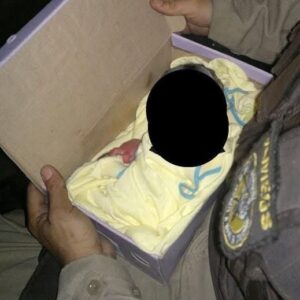
His cheeks were too narrow, his limbs too thin, skin pale enough that faint blue veins showed through. His cry was fragile, strained, as if even making sound cost him something.
Juni wasn’t wailing. She was doing something worse—crying quietly, steadily, like someone who’d been crying for so long she’d run out of energy before she ran out of fear.
She kept pressing a damp cloth to the baby’s lips, whispering again and again like prayer was a technique.
“Please,” she said, voice breaking. “Please drink. Please, please.”
Owen lowered himself to the floor slowly so he wouldn’t startle her. He spoke the way you speak when you want your voice to feel like a hand in the dark.
“Hi, sweetheart. I’m Owen. You called for help, and you did the right thing.”
Juni blinked at him through wet lashes like she wasn’t sure adults were still capable of meaning what they said.
“He’s Rowan,” she managed, shifting the baby carefully. “He’s my brother. But I watch him when Mom’s sleeping. Because Mom’s always tired.”
Owen’s gaze moved across the room without lingering too long on anything, because he didn’t want to make her feel examined.
Empty bottles near the sink. Some filled with water. Some with a thin pale liquid. A few cracked nipples that looked old and overused.
And on the floor near the couch—an old phone with a paused video on the screen, the title big enough for him to read from where he sat:
How to feed a baby when you don’t have help.
A seven-year-old had been teaching herself how to be a parent.
Owen’s throat tightened.
“Where is your mom right now?” he asked gently.
Juni jerked her chin toward the hallway, where the shadows gathered thicker than the living room.
“In her room,” she said, swallowing hard. “She said she just needed a nap, but it’s been a long time. I didn’t want to bother her. I tried. I really tried.”
Owen’s hand went to his radio.
“Dispatch,” he said, voice controlled, “confirm EMS is en route. Infant appears severely underweight and weak.”
Then he looked back at Juni.
“Can I hold Rowan for a minute?” he asked softly. “Just so I can help him.”
Juni hesitated like he’d asked her to step off a cliff.
Because she’d been the only one holding him together.
But finally—slowly, carefully—she transferred the baby into Owen’s arms with the solemn seriousness of someone handing over something priceless.
Rowan weighed almost nothing.
It hit Owen like a punch you don’t see coming. Even without a scale, he knew. This wasn’t “baby won’t eat.” This was something deeper.
“You stay right here,” he told Juni. “The medics are coming. We’re going to take care of him.”
He walked down the hallway, opened the last door, and found a woman fully dressed on the bed, shoes still on, hair messy against the pillow.
Her face had the kind of exhaustion that didn’t come from one bad night. It came from months. From desperation. From survival done badly because survival done well costs money and time and help people don’t always have.
Owen touched her shoulder, firm and gentle.
“Ma’am. You need to wake up.”
Her eyes snapped open, confusion turning instantly to fear when she saw the uniform.
“What—what happened?” she gasped. “Where’s Juni? Where’s my baby?”
“They’re taking him to the hospital,” Owen said, watching her expression crack as the words sank in. “And we’re going too.”
At Briar Glen Community Hospital, the lights were too bright and the chairs were too hard, the kind of place that made pain feel exposed.
But the staff moved with practiced urgency that Owen felt grateful for even while his chest stayed tight.
A pediatrician—Dr. Hannah Keats—took one look at Rowan and started calling orders before anyone finished introductions.
Nurses moved around the baby with quick hands and focused faces. Oxygen. IV fluids. Monitors beeping steady like they were trying to keep rhythm with a tiny heart.
Owen stayed near Juni, because she’d come in holding herself together with thread, and he wasn’t about to let the thread snap now.
The mother’s name was Tessa Hale. Her explanation came out like a confession from someone who couldn’t tell where the line between “struggling” and “failing” had been drawn.
“I work nights at the packaging plant,” she said, words spilling fast. “Sometimes doubles because rent doesn’t care if you’re tired. I thought I could keep up. I thought I could leave bottles ready. Juni’s smart—she’s always been smart—”
She broke on the last word.
“I didn’t mean—”
Owen didn’t interrupt. When people were drowning, they talked like that, grabbing at any sentence that might keep their head above water.
Dr. Keats stepped out after the initial exam. Her face held a careful seriousness—different from panic, different from judgment.
“We’re stabilizing him,” she said. “But I need to be honest. This doesn’t look like a straightforward feeding issue.”
Tessa’s eyes widened. “What do you mean? I fed him. I tried.”
“I believe you,” Dr. Keats said. “That’s why we’re running deeper tests. Something else may be affecting his strength and his ability to feed.”
Juni squeezed Owen’s hand so tightly it hurt.
“Is he going to disappear?” she whispered.
Owen crouched to her level, choosing his words like they mattered—because they did.
“He’s here,” he said. “And the doctors are working on keeping him here. You did the bravest thing by calling.”
Later that night, a pediatric neurologist arrived—Dr. Priya Desai—quiet focus in her movements as she checked reflexes and muscle tone, watching tiny responses most people wouldn’t know how to read.
Hours passed. Tests ran. Imaging. Lab work. More waiting.
Finally, Dr. Desai and Dr. Keats brought Owen and Tessa into a small consultation room that smelled faintly of disinfectant and old coffee.
Doctors didn’t gather people like that unless the truth was too big to deliver in passing.
Dr. Desai folded her hands and spoke with clarity wrapped in kindness.
“Rowan’s symptoms suggest a genetic neuromuscular condition called spinal muscular atrophy,” she said. “It affects the nerve cells that send signals to muscles. When those signals weaken, muscles don’t build the way they should.”
Tessa’s face went blank, like the words couldn’t find a place to land.
“Genetic?” she whispered. “So… I did this?”
Dr. Keats leaned forward, firm but not harsh.
“No,” she said. “This isn’t something you caused by working too much or being tired or making the wrong choice on the wrong day. Genetics doesn’t work that way. Blame won’t help Rowan breathe or grow.”
Owen watched Tessa shake as she tried to hold herself together and failed, and he thought about Juni’s words—he’s getting lighter every day—and how sharp children were when no one listened.
Dr. Desai continued.
“There are treatments,” she said. “Including a one-time gene therapy that can make a significant difference, especially when given early. Timing matters.”
Hope flashed in Tessa’s eyes through tears.
“Then we do it,” she said fiercely. “I don’t care what it takes.”
Dr. Keats exhaled slowly.
“The cost is in the millions,” she said. “Insurance approval can be difficult. And… there’s also a custody investigation because a seven-year-old was left to carry a responsibility no child should ever carry.”
The system arrived the next morning wearing procedure like armor.
A young social worker—Kelsey Raines—showed up with a tablet and a tight expression that looked like judgment disguised as policy.
“I need to interview the child separately,” she said. “We’ll be arranging temporary placement.”
Tessa’s face crumpled into something worse than panic—heartbreak.
“Please,” she said. “She didn’t do anything wrong. She was trying to help. I was trying to survive.”
Owen stepped in, careful but firm.
“If earlier neighbor reports were made,” he said, “they should have been followed up. If anyone had visited, they would’ve seen trouble long before a baby ended up in intensive care.”
Kelsey’s jaw tightened. “I can’t speak to older reports.”
And she walked away to make calls.
Later that day, another woman arrived—older, silver hair pinned neatly back, eyes warm but sharp.
“I’m Doreen Pruitt,” she said. “I’m taking over this case. This needs experience, not paperwork.”
When she reviewed the history, her face hardened.
“Two reports were closed without a visit,” she said quietly. “And the supervisor who closed them has a pattern.”
Juni was placed temporarily with the Reynolds, an older couple with kind faces and a spare room that smelled like clean sheets and warm dinner.
But safety didn’t erase fear overnight.
Every time Owen visited, Juni asked the same question, steady and trembling all at once.
“How’s Rowan?”
One evening, while she colored a picture for Rowan’s hospital wall, she looked up with eyes that felt too old for seven.
“Officer Kincaid,” she asked, “are you going to leave too?”
The question landed in Owen like a weight.
He sat across from her, voice low and sure.
“No,” he said. “I’m here.”
She hesitated, then offered her pinky like a contract.
“Promise?”
Owen hooked his finger with hers.
“Promise.”
Back at the hospital, the gene therapy approval process moved like molasses.
Denied.
Appeal denied.
More letters. More documentation. More “we understand your urgency” language that meant nothing when a baby’s muscles were weakening by the day.
One afternoon in the cafeteria, Doreen sat across from Owen and said a sentence that shifted his whole life.
“If the court grants you temporary guardianship,” she said, “you can make medical decisions and apply for emergency funding faster than Tessa can right now. The system has tied her hands.”
Owen stared at her.
“You mean me,” he said, like repeating it might make it make sense.
Doreen nodded. “You’ve shown up every day. And right now, showing up matters more than perfect circumstances.”
That night, Owen sat at his kitchen table with guardianship forms spread out like a second job he never asked for.
He thought about his wife, gone too soon. About the way he’d made his world small afterward because loneliness felt safer than loving anyone you could lose.
Then he remembered Juni’s pinky promise—bright and stubborn.
He picked up the pen.
He signed.
Attorney Mira Landry took the case for free, saying she was tired of watching families fall through cracks wide enough to swallow them whole.
In court, the state attorney spoke about neglect and danger and removal.
Mira stood and reframed the truth.
Rowan’s condition was genetic. Not a punishment for poverty. Not a consequence of a mother being tired. Not a moral failure.
She laid out evidence that reports had been closed without visits. That procedures hadn’t been followed. That the system that now arrived with authority had arrived late.
Owen testified last.
When the judge asked why a single officer should be trusted with such responsibility, he didn’t give speeches. He didn’t need to.
“Because I will keep showing up,” he said. “And these kids need a bridge, not a replacement.”
The judge delayed briefly for final evaluations, and the delay hurt, because time was the one thing nobody could donate.
At the final hearing, more evidence came in.
Doreen’s complaint uncovered that the supervisor who closed those earlier cases had been closing hundreds without proper follow-up—claiming visits that never happened.
The courtroom shifted when that became part of the record.
Because the problem wasn’t a struggling mother.
It was a system that had been looking away until a child had to make an emergency call she should never have known how to make.
The most powerful testimony came from a recorded video of Juni.
Small feet dangling above the floor. Hands folded in her lap like she was afraid movement might ruin her chance to be heard.
“My mom loves us,” Juni said, voice quiet but steady. “She was so tired she couldn’t hear me. I tried to help my brother. I watched videos and I tried and I tried. Officer Kincaid didn’t go away. I just want us together. I want someone to stay.”
When the video ended, silence filled the room in a way that felt human.
The judge looked at Tessa.
“Do you consent to temporary guardianship while you complete treatment and stabilize?”
Tessa stood, tears shining, voice clear.
“Yes,” she said. “He’s been there. And I’m going to do the work so I can be there the right way.”
The judge’s decision came without flourish.
“Temporary guardianship is granted to Officer Owen Kincaid for ninety days,” she ruled. “He will have authority to make medical decisions. Ms. Hale will complete the recommended program. Review in ninety days.”
Owen exhaled like he’d been holding his breath for weeks.
With guardianship in place, emergency funding moved faster. Charities could process the request. The hospital could proceed without custody questions tying everything up.
Within days, Rowan received the gene therapy Dr. Desai had been pushing for since the first night.
The change wasn’t instant. Bodies don’t heal on command.
But over the next months, Rowan gained weight—slow, steady, real. His breathing strengthened. Therapy appointments filled calendars. Progress came in inches, and Owen learned that inches add up when love refuses to stop counting.
Tessa completed her program and came back steadier—not magically fixed, not wrapped in a neat ending, but able to ask for help before she collapsed.
When she visited, she looked like someone learning to stand again.
One autumn afternoon, Owen spread a blanket in a small park where leaves turned gold and the air smelled like dry grass and distant fireplaces.
Juni ran through fallen leaves laughing the way children are meant to laugh—loud, unguarded, free.
Tessa arrived carrying Rowan, who was bigger now, still needing extra support, still working hard in therapy, but present.
Juni knelt beside him and let him wrap his tiny fingers around hers.
She grinned up at Owen like she was showing him a miracle she’d helped earn.
“He’s not getting lighter anymore,” she said.
Tessa sat down, watching her children, voice soft and shaking.
“I thought we were invisible,” she admitted.
Owen looked at them—imperfect, stitched together, real—and spoke the simplest truth he had.
“Not anymore,” he said. “Not while I’m here.”