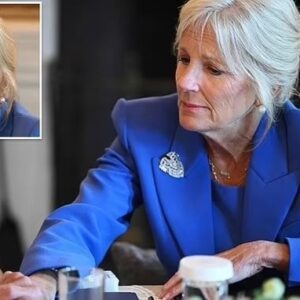
Cold water exploded over Isabel’s shoulders, cascading down her hair, soaking through the thin fabric of her blazer, splashing onto the polished tiles with a humiliating slap.
For a heartbeat, no one moved.
The office air froze—thick, suffocating, unreal.
A droplet slid from Isabel’s chin and fell to the floor.
Another followed.
And then another.
She didn’t scream.
She didn’t sob.
She just stood there, dripping, the world reduced to the sound of water ticking onto tile like a broken clock counting down her dignity.
Forty people watched.
Some with shock.
Some with horror.
Some with the guilty stillness of those who feared they might be next.
Julián Mena set the empty bucket down beside her feet with theatrical calm.
“There,” he said, voice loud enough for the entire department. “Perhaps now you’ll understand that begging has consequences.”
A murmur rippled through the office.
Begging.
The word hung like rot in the air.
Isabel slowly lifted her eyes.
For the first time since the water hit her, she looked directly at him.
Something had changed.
The shame that had flooded her seconds earlier was receding—not gone, but receding—revealing something harder underneath.
“Are you finished?” she asked quietly.
Her voice wasn’t broken.
It wasn’t pleading.
It was steady.
Julián blinked.
He had expected tears. Collapse. Flight.
Not composure.
“Get out,” he snapped. “Before I call security.”
Isabel didn’t move.
She glanced around the office once—at the cubicles, the fluorescent lights, the people who had watched and done nothing.
Then she bent down.
Picked up the empty bucket.
Set it upright beside the copier.
Carefully.
Deliberately.
A gesture of order in the chaos he had created.
And then she turned and walked out.
No rush.
No stumble.
No backward glance.
Water still dripping from her sleeves onto the corporate floor.
The Elevator
The elevator doors closed on her reflection.
Wet hair clinging to her face.
Mascara smudged faintly under her eyes.
Clothes heavy with humiliation.
She pressed the lobby button.
The descent felt endless.
Inside her chest, something trembled—not weakness, not quite anger.
Recognition.
She had reached bottom.
And bottom has a strange clarity.
When you have nothing left to lose, fear changes shape.
Outside
Rain had begun to fall by the time Isabel stepped out of Altavista’s glass doors.
It blurred the city into gray streaks.
For a moment she stood on the sidewalk, blending with the weather—wet woman in wet rain, indistinguishable from the storm.
Her hands shook.
Not from cold.
From the delayed shock of public destruction.
She had come to that office to ask for help.
Not charity.
Help.
Her contract cleaning company had lost its largest account the month before. Her savings were gone. Her rent overdue. She had heard Altavista outsourced facilities again and had hoped—desperately—that her old connection with Julián might secure a small subcontract.
Instead, he had chosen spectacle.
Power needs witnesses.
He had found forty.
Isabel inhaled slowly.
Then reached into her soaked bag.
Her phone still worked.
She dialed one number.
It rang once.
Twice.
“Fuentes,” a calm male voice answered.
Isabel closed her eyes briefly.
“It’s Isabel,” she said. “I need to file something.”
The Complaint
Three hours later she sat in a small office across town, wrapped in a borrowed cardigan, hair still damp.
Across from her sat Mateo Ríos, senior partner at Ríos & Calderón Legal.
He listened without interrupting as she described everything.
The insult.
The crowd.
The water.
When she finished, silence lingered.
Mateo leaned back.
“Why today?” he asked gently. “Why go to him?”
Isabel stared at her hands.
“Because once,” she said, “he worked for me.”
Mateo’s brows lifted.
“Ten years ago,” she continued quietly, “before the divorce… before the bankruptcy… before everything… Altavista was my company.”
The room held stillness.
“I sold majority shares during restructuring,” she said. “Kept minority equity. Stayed on board. Then life… collapsed.”
She swallowed.
“Julián was a junior sales rep I promoted. Trained. Defended. He climbed. I fell. And today he didn’t recognize me.”
Mateo’s gaze sharpened.
“You still hold equity?”
“Eight percent,” she said.
His eyes changed.
“Isabel,” he said slowly, “do you realize what you’re telling me?”
She looked up.
“I still own part of Altavista,” she said. “Yes.”
Mateo opened a drawer. Pulled out a tablet. Accessed corporate filings.
Scrolled.
Stopped.
Then turned the screen toward her.
Altavista Holdings — Shareholder Structure
Her name remained.
Untouched.
Diluted.
But present.
Eight percent of a billion-dollar corporation.
Mateo exhaled.
“Then this,” he said quietly, “is not workplace harassment.”
He met her eyes.
“This is shareholder abuse.”
The Boardroom
The emergency board session was called forty-eight hours later.
No announcement.
No rumor.
Just a message marked URGENT.
Julián entered the executive floor conference room confident, irritated, and unaware.
He expected routine review.
Instead he found twelve directors seated in silence.
At the far end of the table sat Mateo Ríos.
Beside him—
Isabel Fuentes.
Dry. Composed. In a tailored navy suit that erased all trace of the drenched woman from Monday.
Julián stopped mid-stride.
Color drained from his face.
“Sit,” said the chairman.
Julián obeyed automatically.
Mateo slid a document across the table.
“Mr. Mena,” he said calmly, “do you recall this individual?”
Julián swallowed.
“…yes.”
“Please describe Monday’s interaction.”
He hesitated.
Twelve directors watched.
“I asked a disruptive visitor to leave,” he said stiffly.
Mateo pressed play on a tablet.
Security footage filled the wall screen.
The insult.
The bucket.
The water.
Forty witnesses.
One humiliation.
The video ended.
Silence roared.
Mateo spoke again.
“Ms. Fuentes is not a disruptive visitor.”
He tapped the shareholder registry projected beside the video.
“She is an equity holder in Altavista Holdings.”
Julián’s lips parted.
“She is also,” Mateo continued, voice sharpening slightly, “the founder of the regional division you currently manage.”
The room shifted.
A director leaned forward.
“You assaulted a shareholder,” he said flatly.
Julián’s voice cracked. “I didn’t know—”
“That is irrelevant,” Mateo cut in. “You exercised degrading conduct toward an individual whose ownership stake predates your employment.”
The chairman folded his hands.
“Mr. Mena,” he said quietly, “you publicly humiliated the very person who built the ladder you climbed.”
The Fall
Julián tried.
Apologies. Explanations. Context. Stress. Misunderstanding.
None landed.
Power protects itself.
But humiliation of ownership?
Unforgivable.
The vote took ninety seconds.
Termination.
For cause.
Immediate.
Stock options voided.
Non-compete triggered.
Reputation burned.
Security escorted him from the building he once ruled.
Employees watched again.
But this time—
Silence belonged to justice.
The Aftermath
Isabel returned to the same office floor one week later.
No water.
No whispers.
Just employees rising slowly from desks.
Respect has a different sound than fear.
She stood beside the copier—the exact place humiliation had fallen.
“I am not here for revenge,” she said quietly. “I am here for correction.”
She looked around.
“No one who works in this company will ever again be treated as disposable.”
A woman near the back began to cry.
Another nodded.
Culture shifts rarely begin in policy.
They begin in witness.
The Choice
The board offered Isabel reinstatement.
Executive role. Salary. Authority.
She considered.
Then declined.
“I built once,” she said. “Now I rebuild.”
Instead she negotiated something else:
A permanent ethics oversight position.
Employee dignity protocols.
And a fund—
The Fuentes Initiative.
Emergency support for subcontractors and staff facing financial crisis.
The very help she had sought.
Denied.
Then created.
Epilogue: Water
Months later, Isabel stood on a balcony overlooking Altavista’s headquarters.
Rain fell softly across the city.
Mateo joined her.
“Strange symmetry,” he said. “Water again.”
She smiled faintly.
“Yes.”
He glanced sideways. “Do you regret not destroying him?”
Isabel watched rain trace the glass.
“No,” she said. “Collapse was enough.”
She paused.
“Humiliation didn’t define me.”
Her reflection met her eyes in the glass.
“It revealed me.”
Below, employees crossed the courtyard—umbrellas blooming like small acts of protection.
No one knew the soaked woman from months ago.
But the building did.
The floor remembered.
The bucket had fallen.
But dignity had risen.
And this time—
no one dared spill it again.
Part 2: The Echo
Three months after Julián Mena vanished from Altavista, his name still lingered in corridors like a stain that refused to fade.
Not spoken.
But remembered.
Workplaces have memory. Floors hold footsteps. Walls absorb tone. People carry echoes long after events end.
Isabel understood this.
Humiliation does not end when the aggressor leaves.
It ends when dignity replaces fear.
That was the work now.
The first test came quietly.
A junior analyst named Carmen knocked on Isabel’s office door one Tuesday morning, clutching a folder so tightly the edges bent under her grip.
“Do you have a minute?” she asked.
Her voice trembled with that familiar tension—fear of authority, fear of dismissal, fear of being seen as trouble.
Isabel recognized it instantly.
It had once lived inside her.
“Come in,” Isabel said gently.
Carmen sat. Hesitated. Then spoke in a rush.
“My supervisor… he doesn’t yell,” she said. “He doesn’t insult. But he… he makes comments. About how replaceable we are. About how lucky we are to be here. About how complaints ruin careers.”
Isabel listened.
No interruption.
No judgment.
Just presence.
When Carmen finished, the room felt heavy with something fragile: trust.
Isabel leaned forward.
“Do you feel afraid?” she asked.
Carmen nodded.
“Then it matters,” Isabel said.
She took the folder.
Inside were emails. Meeting notes. Subtle coercion. Power disguised as professionalism.
A different kind of abuse than Julián’s spectacle.
Quieter.
Harder to prove.
More common.
Isabel closed the folder.
“We’ll handle it,” she said.
Carmen blinked. “We?”
“Yes,” Isabel said calmly. “You are not alone in this building.”
The System
Within weeks, Isabel redesigned Altavista’s reporting structure.
Anonymous complaint channels.
Protection protocols.
Mandatory dignity training.
Leadership evaluations tied to behavioral metrics—not just performance.
Resistance came fast.
“Overreach,” one executive muttered.
“Culture policing,” said another.
“Employees will weaponize this,” warned HR.
Isabel listened.
Then responded once.
“Fear has been weaponized here for years,” she said. “Now it won’t be.”
The policy passed.
Because the board remembered the video.
Because reputational risk speaks louder than ethics.
But implementation—real implementation—required more than policy.
It required example.
The Confrontation
Carmen’s supervisor—Eduardo Salas—sat across from Isabel in a quiet conference room.
Mid-forties. Polished. Controlled.
The kind of manager corporations reward: efficient, unemotional, intimidating without shouting.
He smiled when he entered.
“That complaint is ridiculous,” he said before sitting. “My team respects me.”
Isabel didn’t answer immediately.
She placed the folder between them.
“Respect or fear?” she asked.
Eduardo’s smile thinned.
“You’re new to corporate leadership,” he said mildly. “Pressure language is standard. High performance environments require clarity.”
“Clarity,” Isabel repeated. “Not devaluation.”
He leaned back. “No one was harmed.”
Isabel met his gaze.
“That’s incorrect.”
Silence stretched.
She slid a printed page toward him.
Employee engagement metrics. Departmental turnover. Stress leave spikes. Anonymous survey excerpts.
Patterns.
Data—the only language some leaders understand.
Eduardo’s jaw tightened.
“You’re making an example of me,” he said quietly.
“Yes,” Isabel said.
No cruelty. No anger. Just truth.
“You represent a system,” she continued. “And the system ends here.”
He exhaled slowly.
“And if I refuse to change?”
Isabel folded her hands.
“Then Altavista will refuse to keep you.”
No raised voice.
No threat.
Just outcome.
Eduardo looked at her for a long moment.
Then nodded once.
“Understood.”
Transformation
Six months later, Carmen led a presentation in the same department where she once trembled.
Her voice steady. Her posture confident.
Eduardo sat in the back row—silent, attentive, altered.
Fear cultures collapse slowly.
But they collapse.
One safe conversation at a time.
The Return of Julián
Isabel did not expect to see him again.
Until the charity gala.
Altavista sponsored the annual city development fund—public event, media coverage, donors and executives.
Isabel attended in understated black.
Professional. Unremarkable.
Until she saw him.
Julián stood near the bar, thinner, older, posture diminished. His suit no longer impeccable. His confidence no longer armor.
He saw her.
Froze.
Then approached slowly.
Isabel did not move away.
Closure rarely arrives scheduled.
It appears.
“You look… well,” he said awkwardly.
“I am,” she replied.
Silence hovered.
“I lost everything,” he said quietly.
She did not respond.
“I thought power meant control,” he continued. “I thought humiliation proved status.”
He swallowed.
“You proved me wrong.”
Isabel studied him.
The man before her was not the one with the bucket.
Collapse had reshaped him.
“What do you want, Julián?” she asked.
He hesitated.
“Nothing,” he said finally. “I just… needed you to know I understand now.”
She tilted her head slightly.
“Understand what?”
His voice barely carried.
“That dignity isn’t hierarchical.”
The words landed between them.
True.
Late.
But true.
Isabel nodded once.
“Then learn from it,” she said.
She turned and walked away.
Not victory.
Not forgiveness.
Completion.
Epilogue: The Bucket
One year after the incident, Altavista held its first Dignity & Leadership Summit.
Executives, staff, contractors—all levels invited.
On stage stood Isabel.
Behind her, projected on screen:
A simple image.
A metal cleaning bucket.
Gasps rippled through the audience.
The symbol was unmistakable.
Isabel spoke quietly.
“This building once witnessed humiliation,” she said.
“Many of you remember.”
Silence deepened.
“I was told that day I did not belong here,” she continued. “That I was beneath the threshold of respect.”
She looked across the crowd.
“No workplace has the right to define human worth.”
She paused.
“This bucket once carried degradation.”
The image changed.
Now the bucket held flowers.
Bright. Living.
“But symbols change,” Isabel said. “Because people change systems.”
She stepped forward.
“Today this company commits to a simple rule: no one here will ever again be reduced to spectacle.”
Applause rose—slow, then strong.
Not for her.
For what replaced fear.
After the summit, Isabel returned alone to the empty conference hall.
The stage lights dimmed.
The bucket—real, not image—sat beside the podium, filled with white lilies.
She touched the rim.
Cold metal.
Memory transformed.
Mateo’s voice came from behind.
“You kept it,” he said.
“Yes,” she replied.
“Why?”
Isabel looked at the flowers.
“Because erasing humiliation doesn’t heal it,” she said. “Transforming it does.”
He nodded.
“Are you free now?” he asked.
She considered.
Humiliation once soaked her to the bone.
Now it no longer lived in her.
“Yes,” she said softly. “I am.”
Outside, rain began again.
But this time—
it did not feel like shame.
It felt like renewal.
And somewhere inside Altavista, floors that once held fear now held something else:
Witness.
Change.
And a promise no bucket would ever break again.
THE END