The whole town of Cedar Hollow thought it was a joke.
When the announcer at the county fair pulled the final raffle ticket and called out, “Ethan Cole!” a wave of laughter rippled through the crowd.
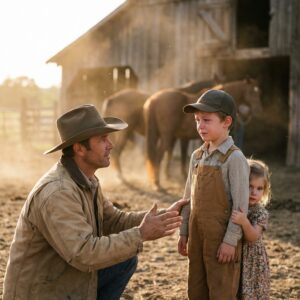
Ethan stood frozen near the lemonade stand, his six-year-old daughter Lily gripping his hand. He hadn’t even meant to buy the ticket. The local feed store had given it to him for free after he helped unload a truck one afternoon.
“You’re kidding,” someone muttered.
“That rundown farm?” another voice chimed in. “Good luck with that, Cole!”
The prize was Miller Farm — 120 acres of overgrown fields, a collapsing red barn, and a farmhouse that had been empty for nearly fifteen years. Old Man Walter Miller had died without heirs, and the bank had been trying to get rid of the property for years. The raffle was a last-ditch attempt to offload what everyone called “the county’s biggest eyesore.”
Ethan swallowed hard and raised his hand.
“That’s me.”
More laughter.
He was Cedar Hollow’s quiet cautionary tale — the single dad whose wife had left three years ago, unable to handle the mounting medical bills after Lily’s premature birth. Ethan worked two part-time jobs: mornings at the auto shop, nights stocking shelves at the grocery store. He rented a cramped one-bedroom apartment above the hardware store. His truck was older than most of the high school seniors.
Winning a broken farm didn’t seem like a blessing.
But as Lily tugged his hand and whispered, “Daddy… does this mean we get cows?” something inside Ethan shifted.
“Yeah, sweetheart,” he said, forcing a smile. “Maybe someday.”
They drove out to Miller Farm the following week in Ethan’s rattling pickup.
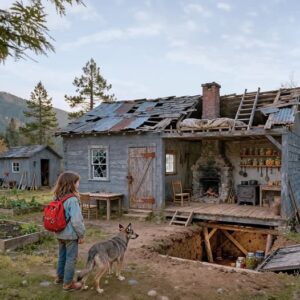
The property sat at the edge of town, framed by rolling hills and tangled oak trees. The long gravel driveway was half swallowed by weeds. The white paint on the farmhouse had peeled away in wide, scaly strips. One shutter dangled crookedly from a single hinge.
Lily leaned forward in her booster seat.
“It looks like a haunted house,” she whispered.
Ethan chuckled nervously. “Guess we’ll have to un-haunt it.”
When he stepped out of the truck, the air smelled of wild grass and old wood. The barn loomed to the left, its doors warped and sagging. A rusted tractor sat half-buried in weeds.
He felt the weight of reality pressing down.
How could he possibly fix this?
But then Lily jumped out and ran toward the open field, her laughter echoing across the empty land.
“It’s so big!” she shouted. “We can have a swing! And a garden! And a puppy!”
A puppy.
Ethan hadn’t thought that far ahead.
Still, he watched his daughter twirl in the tall grass, sunlight catching her hair, and something inside him steadied.
This wasn’t worthless.
This was land.
And land meant possibility.
The first months were brutal.
They moved into the farmhouse because rent was rent, and free was better than expensive. Ethan patched the roof with borrowed shingles from his buddy Mark at the auto shop. He sealed drafty windows with plastic sheets. They slept in one upstairs bedroom because it was the only room without soft spots in the floor.
At night, the wind howled through the cracks.
“We’ll freeze here, Daddy,” Lily whispered one November evening, wrapped in two sweaters and a blanket.
Ethan pulled her close. “Not on my watch.”
He worked longer hours. On weekends, he tore down rotten fence posts and cleared brush. The townspeople drove by sometimes just to look. A few shook their heads. A few smirked.
“Cole’s in over his head.”
“He’ll sell it within a year.”
But Ethan didn’t sell.
He planted.
Using seeds donated by Mrs. Hernandez from the church, he started a small vegetable patch near the house. Tomatoes. Corn. Green beans.
They grew.
Not perfectly — but they grew.
And so did something else.
One afternoon, while clearing debris behind the barn, Lily ran up holding a scruffy brown puppy with oversized paws.
“Daddy! He was under the porch!”
The puppy wagged his tail wildly, licking Lily’s face.
Ethan sighed.
“We can’t afford a dog.”
The puppy whimpered.
Lily’s lower lip trembled.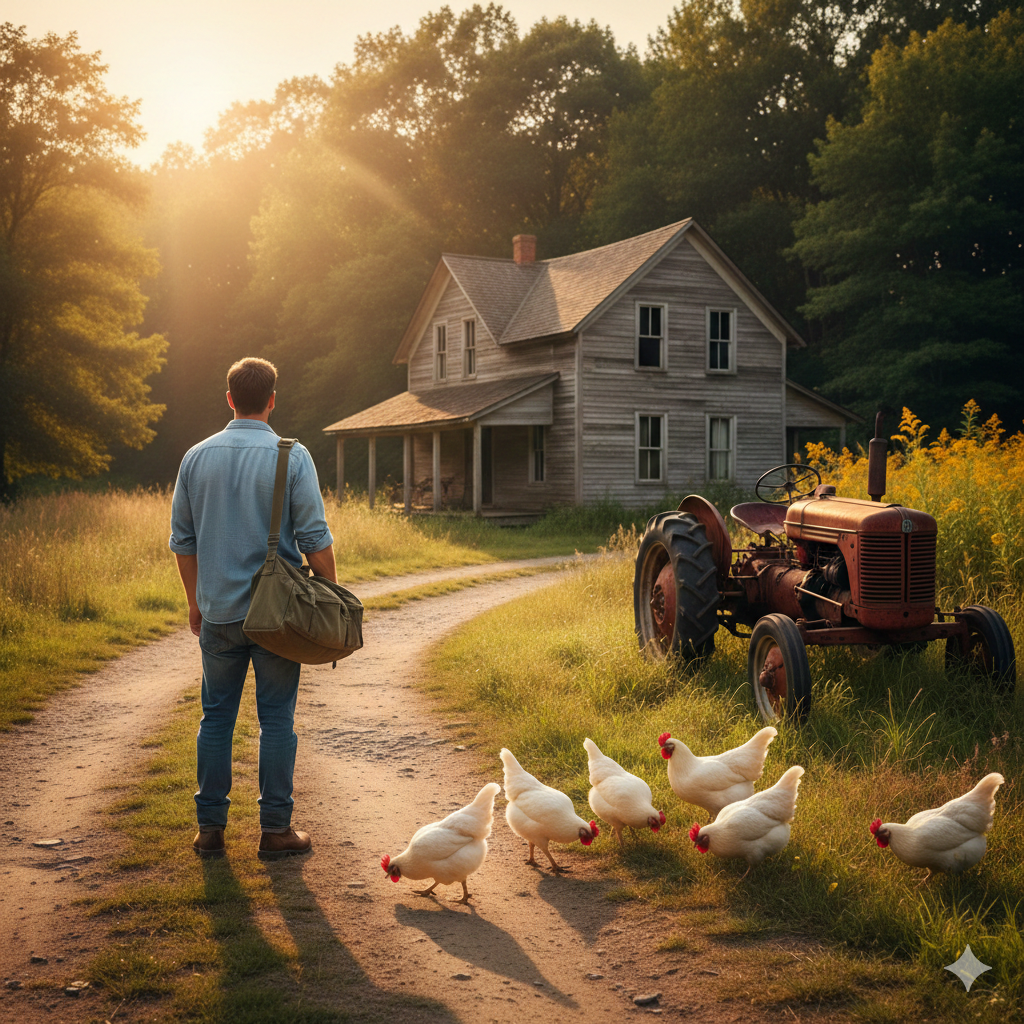
Ethan looked at the empty fields, at the sagging barn, at the endless work waiting for him.
Then he looked at his daughter.
“Okay,” he said softly. “But he’s your responsibility.”
They named him Rusty.
Rusty grew fast — loyal, energetic, and surprisingly protective.
He followed Ethan everywhere, especially when Ethan worked near the barn.
The barn was the biggest problem. Its foundation had shifted. The loft sagged dangerously. Inside were decades of junk: broken tools, rusted cans, piles of mildewed hay.
One chilly spring morning, Ethan decided it was time to clear it out completely.
“If this place is going to survive,” he muttered, “we start here.”
He began hauling out debris, coughing through dust clouds. Lily played outside with Rusty, drawing in the dirt with sticks.
Then Rusty started barking.
Not playful barking.
Alert barking.
Ethan stepped out of the barn.
“What is it, boy?”
Rusty had wedged himself near the back wall of the barn, paws digging furiously at the dirt floor.
“Rusty! Stop!”
But the dog wouldn’t.
He clawed and clawed until something metallic clanged beneath his paws.
Ethan frowned.
The barn floor was old packed earth. No concrete. No foundation slab.
He grabbed a shovel.
“Move, boy.”
He scraped away dirt.
Within minutes, the edge of a metal hatch appeared — thick steel, nearly flush with the ground.
His pulse quickened.
“Lily, stay back.”
“What is it, Daddy?”
“I don’t know.”
The hatch had a heavy iron ring. Ethan pulled.
It didn’t budge.
He cleared more dirt around the edges, exposing hinges. Rusted — but intact.
He pulled again, harder.
With a groan of metal against metal, the hatch lifted.
A blast of cold, stale air rose from below.
There was a ladder.
And darkness.
Ethan fetched a flashlight from the truck.
His hands shook slightly as he descended the narrow ladder.
The beam cut through thick dust.
It was a bunker.
Concrete walls. Shelves lining the perimeter.
And on those shelves—
Wooden crates.
Dozens of them.
Stamped with faded markings: “U.S. Army Supply — 1944.”
Ethan’s breath caught.
He pried open the nearest crate.
Inside were neatly stacked bundles wrapped in wax paper.
He peeled one open.
Cash.
Old U.S. bills.
He stared.
This had to be a mistake.
He opened another crate.
More bundles.
Another.
And another.
His mind raced.
Was it counterfeit? Stolen? Forgotten?
He climbed back up, heart pounding.
“Daddy?”
He looked at Lily’s wide eyes.
“Call Uncle Mark,” he said hoarsely. “Tell him to come over. Right now.”
Within hours, the barn was surrounded by police cruisers.
Word spread faster than wildfire.
Sheriff Dalton descended into the bunker himself. Bank representatives followed. A historian from the state capital arrived the next morning.
The story began to unfold piece by piece.
During World War II, Walter Miller’s father had leased part of the land to the federal government for storage. Cedar Hollow had been strategically remote, safe from coastal threats. Records showed shipments had been stored temporarily before transport.
But near the end of the war, administrative chaos had struck. Some shipments were misfiled. Others misplaced.
And apparently—
Some forgotten.
The crates contained millions in old war-era currency and bonds. Adjusted for inflation and collectible value, experts estimated the total could exceed $30 million.
The town that once laughed now stood silent.
Reporters swarmed the driveway.
“How does it feel to become an overnight millionaire?”
Ethan blinked at the microphones.
“I’m not a millionaire,” he said slowly. “Not yet.”
Because it wasn’t that simple.
Legally, the discovery triggered federal investigation. Ownership of the funds had to be determined. Was it abandoned government property? Did it belong to Miller’s estate? The bank?
Weeks turned into months of legal wrangling.
Through it all, Ethan kept planting.
He repaired fences.
He read Lily bedtime stories.
He waited.
One summer afternoon, a black SUV pulled into the driveway.
Two officials stepped out with briefcases.
Ethan met them on the porch, Rusty at his side.
The government had concluded that due to the property transfer through legal raffle and the expiration of reclamation statutes, a significant portion of the discovered assets legally transferred with the land.
After federal claims and taxes—
Ethan would receive just over $12.4 million.
The rest would go to historical preservation and government recovery.
He sat down heavily in the porch chair.
Twelve million.
Lily ran out, barefoot.
“Daddy, are we in trouble?”
He pulled her into his lap.
“No, sweetheart,” he whispered, tears filling his eyes. “We’re going to be okay.”
Cedar Hollow changed its tune overnight.
Neighbors who once scoffed now offered congratulations. Business owners proposed partnerships. Distant relatives resurfaced.
Ethan listened politely.
Then he did something no one expected.
He didn’t sell the farm.
He restored it.
He hired local contractors — giving work to families who had struggled for years. He rebuilt the barn but preserved the original beams. He turned part of the land into a community garden. He established a scholarship fund at Cedar Hollow High School for single parents pursuing trade certifications.
And he built a veterinary clinic in town — named Rusty’s Care — offering free services for low-income families.
When reporters asked why he hadn’t moved to a mansion in the city, he smiled.
“This place gave me a second chance,” he said. “Why would I leave?”
One crisp autumn evening, Ethan stood at the edge of the field.
The barn lights glowed warmly. Children laughed near the pumpkin patch. Lily — now nine — raced Rusty across the grass.
Mark stepped beside him.
“Remember when they laughed at you?”
Ethan nodded.
“Guess they’re not laughing now.”
Ethan watched his daughter fall into a pile of leaves, giggling.
“They weren’t wrong,” he said quietly.
“I was in over my head.”
Mark frowned. “Then what changed?”
Ethan looked down at Rusty, who trotted back proudly with a stick.
“A dog who wouldn’t stop digging,” he said with a soft laugh.
Then his gaze drifted across the land — golden under the setting sun.
“And a little girl who believed this haunted place could be home.”
The wind carried the scent of harvest.
Cedar Hollow no longer saw Miller Farm as a joke.
It was a symbol now.
Of second chances.
Of quiet perseverance.
Of how sometimes, what looks worthless on the surface holds something extraordinary beneath — waiting for someone brave enough to dig.
And every time Rusty scratched at the dirt, Ethan couldn’t help but smile.
Because sometimes the greatest treasures aren’t the ones buried underground—
They’re the ones who stand beside you while you search.
The first letter arrived in early winter.
Handwritten. No return address.
Ethan found it tucked between bills on the kitchen table after bringing in firewood. Lily and Rusty were outside building what she called “a snow castle for mice.”
He opened it absentmindedly.
Then read it again.
And again.
You think you earned that land. You didn’t. Miller Farm should have stayed in the Miller family. My grandfather worked that soil. You’re living on what’s rightfully ours. Don’t get comfortable.
No signature.
But Ethan didn’t need one.
There had been exactly one Miller descendant still living in Cedar Hollow: Walter Miller’s estranged nephew — Calvin Miller.
A man who had left town decades earlier after a string of debts and quiet scandals.
A man who had returned shortly after the bunker story broke.
Ethan folded the letter slowly.
He didn’t show Lily.
He didn’t show anyone.
But that night, he checked the locks twice.
Winter on the Farm
Snow fell thick across Miller Farm that year.
The rebuilt barn stood strong against wind. The farmhouse held warmth now — insulated walls, new windows, a wood stove that hummed steady comfort.
Wealth had changed the house.
It hadn’t changed Ethan’s habits.
He still rose before dawn. Still checked fences. Still fixed things himself when he could.
And Lily still padded downstairs in mismatched socks every morning asking:
“Can Rusty have breakfast now?”
Life, despite millions, remained ordinary.
But something else had changed.
Visitors.
Investors proposing vineyard conversions. Developers offering to subdivide acreage. Tourism planners pitching “heritage farm experiences.”
Ethan declined them all.
Politely.
Firmly.
Because Miller Farm was no longer survival.
It was belonging.
The Night Rusty Barked Again
It happened in February.
A moonless night. Snow crusted hard across the fields. Wind quiet.
Rusty woke first.
A low growl at the bedroom door.
Ethan sat up instantly.
Rusty only growled like that for one thing:
Strangers.
Ethan grabbed his jacket and stepped onto the porch.
The farm lay silent.
Then Rusty barked — sharp, directional — toward the barn.
Ethan’s pulse jumped.
He moved across the yard, boots crunching snow.
The barn doors stood slightly open.
He never left them open.
Never.
Rusty lunged ahead.
Ethan pulled a flashlight from his pocket and stepped inside.
The beam cut through dust motes.
Everything looked intact—
until he saw the disturbed earth near the bunker hatch.
Footprints.
Fresh.
And beside them—
a crowbar.
Ethan’s chest tightened.
Someone had tried to reopen the bunker.
Someone knew.
Rusty barked furiously toward the rear exit.
A shadow moved.
Ethan swung the light.
A man stumbled through the snow behind the barn, slipping on ice, trying to run.
Ethan chased.
Years of labor had kept him strong.
He tackled the figure near the fence.
They rolled in snow.
The flashlight beam landed on a face Ethan recognized instantly.
Calvin Miller.
Blood and Inheritance
Sheriff Dalton arrived within minutes.
Calvin reeked of whiskey and desperation.
“It’s my family land!” he shouted. “That money was ours! He stole it!”
Ethan stood silent, breath steaming in cold air.
Dalton’s voice hardened.
“Calvin, you broke into private property. That’s felony trespass.”
“You think this is over?” Calvin spat at Ethan. “Courts can still reopen claims.”
But they couldn’t.
And they didn’t.
Calvin Miller was arrested.
Charged.
And Cedar Hollow watched again.
But this time, not with laughter.
With clarity.
What the Farm Really Became
Spring came early that year.
And with it, something unexpected.
Children.
Dozens of them.
It started small.
A local teacher asked if students could visit Miller Farm to learn about agriculture. Ethan agreed.
Then another school asked.
Then another.
Soon buses arrived weekly.
Lily became unofficial tour guide.
“This is Rusty,” she told every group proudly. “He found treasure.”
Ethan watched children run across fields that had once been abandoned.
And something shifted again.
The farm wasn’t just his anymore.
It was community.
The Decision
By summer, Ethan made a choice.
He called a town meeting in Cedar Hollow’s old hall.
Residents packed the room.
Even those who once mocked him came.
Ethan stood at the podium awkwardly.
“I didn’t grow up here,” he began. “But this farm saved my life. And my daughter’s.”
He paused.
“I want Miller Farm to stay more than private land. I want it protected. Preserved. Shared.”
Murmurs rippled.
He continued.
“I’m placing half the acreage into a permanent agricultural trust. It can never be sold or developed. It stays farmland — for Cedar Hollow. Forever.”
Silence.
Then applause.
Long.
Standing.
Calvin’s Final Move
Calvin Miller was released months later.
Bankrupt.
Disgraced.
But still angry.
He filed a civil claim anyway — alleging improper transfer of wartime assets.
The case dragged for months.
Reporters returned.
Lawyers circled.
Ethan endured quietly.
Then the ruling came.
Final.
Binding.
The court declared the bunker funds legally transferred through property conveyance.
Calvin Miller held zero claim.
Case dismissed.
He left Cedar Hollow for good.
And the farm remained.
Lily’s Memory
One evening late that autumn, Lily sat beside Ethan on the porch swing.
She was older now.
Nine going on ten.
“Daddy?”
“Yeah, sweetheart?”
“Before we found the bunker… were you scared?”
He considered.
“Every day.”
“Of the farm?”
“No.”
“Of failing you.”
She leaned against him.
“You didn’t fail.”
He swallowed.
“You believed before I did,” he said softly.
She smiled.
“Because I saw the treasure first.”
He laughed quietly.
“Where?”
She pointed at Rusty sleeping by the steps.
“There.”
The Marker in the Barn
On the anniversary of the discovery, Ethan installed a small plaque inside the barn beside the hatch.
It read:
On this land, buried beneath hardship and doubt, we found not wealth — but possibility.
Discovered by Rusty, 2019.
Restored by perseverance.
Visitors read it often.
And understood.
Years Later
Miller Farm became a landmark.
Students interned there.
Local produce markets flourished.
The scholarship fund supported dozens of single parents.
Rusty aged.
His muzzle silvered.
His steps slowed.
But he still walked the barn every morning with Ethan.
Always stopping at the hatch.
As if checking.
As if remembering.
The Last Dig
Rusty died in late spring.
Peacefully.
Under the same oak where Lily once found him.
Ethan buried him beside the barn.
Lily placed the first shovel of earth.
“He found us everything,” she whispered.
Ethan nodded.
“Yes.”
What the Town Finally Understood
Cedar Hollow had laughed once.
At a raffle.
At a broken farm.
At a struggling father.
They didn’t laugh anymore.
Because Miller Farm had become proof of something rare:
That opportunity sometimes arrives disguised as burden.
That perseverance uncovers what chance hides.
That a dog digging in dirt can change destinies.
Ethan at the Field Edge
Years later, Ethan still stood at the field edge each harvest sunset.
The barn stood straight.
The farmhouse glowed.
Lily — now grown — walked the land with her own children.
And the soil held more than crops.
It held story.
He thought often of the night Rusty dug.
The clang beneath earth.
The hatch lifting.
Darkness opening.
And what lay inside.
People said the farm made him rich.
But Ethan knew better.
It had done something greater.
It had turned survival into legacy.
Because the town had laughed when a single dad won a worthless farm.
But what he found inside—
was never just money.
It was home.